



Lead Management · Colleges & universities
CRM for Colleges: A Clear Next Step for Every Enquiry
CRM for colleges should help admissions teams respond to genuine student interest with timely, relevant follow-up. EDU Lead Management captures enquiries, organises counselling work and helps teams understand which programmes and intakes each prospect is considering.
EDU CRM for colleges brings prospect enquiries, programme interests and counselling follow-ups into an organised admission pipeline. Counsellors can respond with relevant context and admission leaders can examine where interested applicants need attention, before a formal application begins.
sourcesWebsite form38%Education fairs21%Campaigns24%Referrals11%Walk-ins6%
From volume to pipeline
A CRM for Colleges That Turns Enquiries Into a Pipeline
Higher education enquiries rarely arrive through one channel. A prospective MBA applicant may submit a website form, respond to a campaign and later call the admissions office. A student comparing postgraduate programmes may visit a campus, request a prospectus and return weeks later with a question about eligibility.
When each contact becomes a separate lead, the institution risks duplicate outreach, missed follow-ups and unreliable reporting. EDU's CRM for colleges brings these interactions into one prospect record, so admissions teams can tell a new enquiry from an ongoing conversation.
Student enquiry management gives counsellors a clear record of programme interests, conversations and next follow-ups.
Keep the origin of an enquiry visible, whether it comes from a form, campaign, referral, telephone conversation or walk-in.
Fair · PuneWebsiteReferralAssign responsibility to the relevant counsellor or team rather than leaving a prospect in an unowned queue.
Counsellor · R. ShahPG teamRecord programme interests, contact attempts, responses and next steps in the prospect timeline.
3 calls · 2 emailsAsked: scholarshipsTrack progress from new enquiry to active counselling, qualification and admission readiness.
Active → qualifiedIntake: Aug 2027The objective is not to count contacts. It is to make the next useful action visible to the person responsible for it.
Features
College CRM Features That Give Admissions Teams Control
Multi-source enquiry captureLead validation and duplicate controlCounsellor activity timelineLead stages and qualificationPipeline and source analytics
Bring prospective student interest from institutional websites, digital campaigns, telephone enquiries, WhatsApp, referrals, campus visits and supported partner feeds into one lead pipeline.Identify unusable or potentially duplicated records before they create unnecessary counselling work.Keep calls, notes, replies, appointments, communication history and follow-up commitments associated with the prospect.Distinguish new, contacted, active, qualified, admission-ready, lost and other institution-defined pipeline states.Monitor conversion between enquiry stages and compare the quality of source channels by programme or intake period.
Source and campaign contextRule-based lead assignmentFollow-up reminders and task queuesOwnership and workload reportsConnected admission handoff
Retain information about where a prospect came from so admissions and marketing teams can understand the channels generating relevant programme enquiries.Route appropriate enquiries to counsellors or teams according to the institution's configured operating rules.Make due, overdue and upcoming actions visible so interested prospects are not overlooked during busy periods.Review assigned leads, first-action activity, pending work and counsellor engagement without manually collecting separate updates.Carry relevant prospect context into the formal application process instead of asking the applicant to restart the relationship.
Multi-source enquiry capture · Source and campaign context
Bring prospective student interest from institutional websites, digital campaigns, telephone enquiries, WhatsApp, referrals, campus visits and supported partner feeds into one lead pipeline. Retain information about where a prospect came from so admissions and marketing teams can understand the channels generating relevant programme enquiries.
Lead validation and duplicate control · Rule-based lead assignment
Identify unusable or potentially duplicated records before they create unnecessary counselling work. Route appropriate enquiries to counsellors or teams according to the institution's configured operating rules.
Counsellor activity timeline · Follow-up reminders and task queues
Keep calls, notes, replies, appointments, communication history and follow-up commitments associated with the prospect. Make due, overdue and upcoming actions visible so interested prospects are not overlooked during busy periods.
Lead stages and qualification · Ownership and workload reports
Distinguish new, contacted, active, qualified, admission-ready, lost and other institution-defined pipeline states. Review assigned leads, first-action activity, pending work and counsellor engagement without manually collecting separate updates.
Pipeline and source analytics · Connected admission handoff
Monitor conversion between enquiry stages and compare the quality of source channels by programme or intake period. Carry relevant prospect context into the formal application process instead of asking the applicant to restart the relationship.
Practical control
EDU's education-focused lead management capabilities support the day-to-day decisions of a college or university admissions office.
An admissions CRM connects prospective student contact history with the stage of their enquiry, before a formal application is created.
Each function contributes to the same outcome: fewer unexplained gaps between student interest and responsible institutional action.
The counselling cycle
Follow the Prospect, Not Another Spreadsheet
Capture — The interest arrives.Assign — The right team takes ownership.Engage — The conversation develops.Qualify — Readiness becomes clearer.Hand over — The formal process begins.
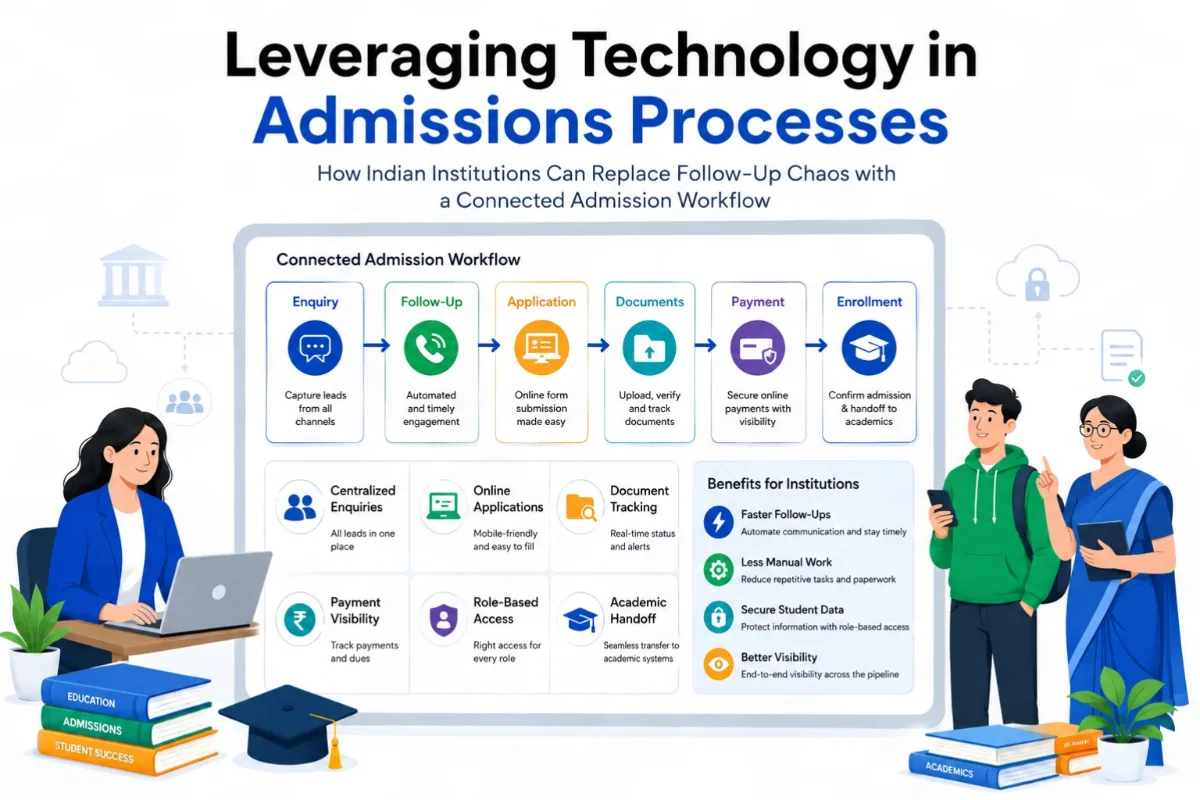
A student requests information about an MSc programme. EDU records the enquiry, its source, the student's available contact details and the programme of interest.The record enters the appropriate counsellor queue. Assignment and ownership are visible to the team responsible for responding.The counsellor records the discussion, shares relevant information through the institution's available communication channels and sets the next follow-up.As the prospect shares their preferred intake, programme fit and intention to apply, the lead moves through the institution's defined qualification stages.Once the student is ready to apply, the relevant record continues into Admission Management. Application requirements, document verification and decisions then belong to the formal admissions workflow.
Capture — The interest arrives.
A student requests information about an MSc programme. EDU records the enquiry, its source, the student's available contact details and the programme of interest.
Assign — The right team takes ownership.
The record enters the appropriate counsellor queue. Assignment and ownership are visible to the team responsible for responding.
Engage — The conversation develops.
The counsellor records the discussion, shares relevant information through the institution's available communication channels and sets the next follow-up.
Qualify — Readiness becomes clearer.
As the prospect shares their preferred intake, programme fit and intention to apply, the lead moves through the institution's defined qualification stages.
Hand over — The formal process begins.
Once the student is ready to apply, the relevant record continues into Admission Management. Application requirements, document verification and decisions then belong to the formal admissions workflow.
Across the full cycle
The value of a lead management system becomes clearer when an enquiry moves through the complete counselling cycle.
Lead source tracking for colleges helps admissions teams compare enquiry channels without treating every contact as a qualified applicant.
Keeping these stages distinct prevents two teams from claiming ownership of the same decision. Lead Management coordinates the relationship before application; Admission Management governs what happens after the formal application starts.
Before the next call
Give Counsellors College CRM Context Before the Next Call
Admissions counselling works best when staff understand the prospect, not just the most recent missed call. EDU supports a working record that can bring the essential details together before a conversation.
Programme interestThe degree, specialisation or academic department the student has asked about.
Preferred intakeThe academic session or admission period relevant to the prospect.
Previous interactionsQuestions answered, communication attempts and details already discussed.
Current commitmentThe agreed next action, its owner and the date it is due.
Lead statusWhether the prospect requires initial contact, further counselling, qualification or a formal application link.
A student recruitment CRM supports a better counselling handover when the assigned team can see the conversation history.
This context helps counsellors avoid repeated introductory questions. It also makes handovers between staff more accountable when responsibilities change during an intake cycle.
For prospective students, the experience should feel continuous. They should not need to repeat their programme interests or explain a previous conversation every time they connect with the admissions office.
Respond in time
A College CRM That Responds in Time, Not Only to Promising Leads
An institution may receive hundreds of enquiries during an application campaign. New leads, prospective students waiting for replies and warm prospects who have requested a callback all compete for attention. A strong lead operation needs a way to distinguish urgency without abandoning older conversations.
The institution should set response expectations. A service target is useful when it helps managers discover blocked work, not when it replaces careful counselling. Lead-ageing and follow-up status are also more informative beside enquiry source and programme interest.
Meaningful interest
Understand Which Sources Generate Meaningful Interest
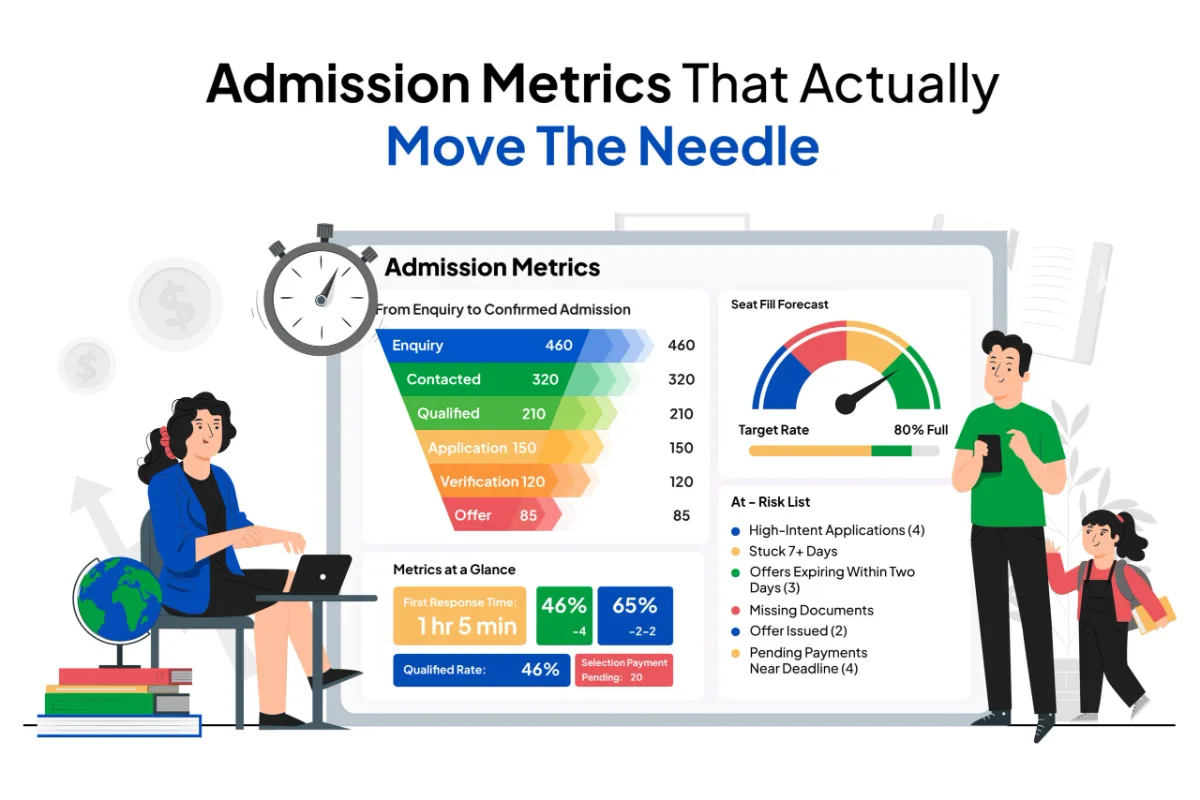
Large lead counts can conceal weak enquiry quality. A campaign may deliver many contacts but few relevant programme enquiries. Another source may generate fewer leads and a stronger proportion of qualified prospects. EDU helps institutions examine source mix and pipeline movement rather than relying on volume alone.
How many prospective students contacted the institution during the selected period.
How many enquiries contain usable information after relevant data-quality checks.
The number of leads assigned and given a recorded first response.
The share of prospects that advanced to a defined admissions-ready stage.
How many qualified prospects proceeded into formal applications where the connected workflow is enabled.
Which channels contribute enquiry volume, productive counselling conversations and subsequent application activity.
These distinctions make reporting more credible to admission heads, directors and institutional leadership. They also help marketing teams interpret campaign performance without claiming that every enquiry has the same value.
Many programmes, one pipeline
Run a Multi-Programme Intake in One College CRM
A university may recruit for undergraduate, postgraduate, diploma and research programmes at the same time. Different faculties can have different admission windows, eligibility information and counselling responsibilities. So a single undifferentiated lead queue makes it hard to know which team should act.
Programme-specific contextKeep the student's academic interest alongside the enquiry record.
Campus or department ownershipDirect enquiries according to the institution's assignment configuration.
Intake-stage visibilityIdentify whether the prospect is exploring, actively considering or prepared to apply.
Transfer without context lossPreserve the available history when a counsellor or responsible team changes.
EDU's CRM for colleges supports a deliberate operating structure by keeping programme and ownership context with each enquiry. Institutions can review prospect groups by available fields, stages and counsellor responsibilities, so teams coordinate campaigns and counselling across multiple academic offerings.
The result is a pipeline that reflects how higher education admissions teams actually operate rather than a generic contact database.
For the people responsible
College CRM Benefits for the People Behind Enrolment
Spend less time searching for previous conversations and contact details.
Prioritise upcoming follow-ups with the prospect's programme interest in view.
Maintain a clearer record of commitments and counselling progress.
See ownership, activity, ageing and qualification across the active enquiry pipeline.
Identify unattended enquiries before they become avoidable losses.
Review staffing and workload pressures during peak admission periods.
Compare enquiry sources with subsequent engagement and qualification.
Understand which campaigns attract more relevant prospective students.
Improve coordination with counselling teams around enquiry quality.
Receive more consistent follow-up and relevant programme information.
Continue conversations without repeated explanations.
Move towards formal application with greater clarity about the next step.
These benefits are practical rather than guaranteed conversion figures. The impact depends on team processes, response quality, campaign performance and how the institution configures its workflow.
Where Lead Management sits
Connect Your College CRM With the Wider EDU Ecosystem
Lead Management sits at the beginning of the student journey. Its primary responsibility is to capture prospective interest, coordinate counselling and establish application readiness. A connected ERP and LMS becomes valuable when the institution can continue beyond that first stage without unnecessarily rebuilding records.
Receives the prospect when the formal application begins, with the required context for programme-specific forms, documents and decisions.
Maintains the enrolled student's institutional record after admission has been confirmed and verified.
Handles applicable student billing after the relevant fee plan has been established, rather than treating a counselling conversation as a financial obligation.
Can support institution-approved answers to routine questions and guide users towards relevant information where the configured assistant experience is available; formal advice and admission decisions remain with authorised teams.
The boundary between modules matters. An interested prospect is not yet an applicant, and an applicant is not yet an enrolled student. EDU is strongest when those differences remain clear while the record moves forward.
People, not scores
College CRM: Measure Progress, Not People
Pipeline metrics support decisions, but they need responsible interpretation. A lead stage describes a workflow position, not a person's worth or academic potential. Institutions set qualification criteria and decide how to respond to enquiries, while the software only provides visibility into the available information.
Useful reporting views can include stage conversion, response timeliness, programme interest, source mix, counsellor workload and lead ageing. Managers can examine these views together to recognise process bottlenecks: a high number of unassigned leads, an overloaded team or a recurring delay after the first conversation.
Personal information should be accessible only to staff whose responsibilities require it. Contact histories, notes and communication details need appropriate access policies, lawful collection practices and institutional retention procedures. EDU provides a working environment; the institution remains responsible for its data governance choices.
They come back
A Counsellor Has the Previous Conversation
Prospective students often enquire about more than one programme or return after an earlier interaction. EDU helps admissions teams see the relevant enquiry and follow-up history before the next conversation.
Source information and assigned ownership remain visible so no contact is treated as a completed application prematurely.
CRM for Colleges: Questions Admissions Teams Often Ask
What is lead management software for colleges and universities?
How is EDU Lead Management different from Admission Management?
Can enquiries from different sources be managed together?
How does EDU help counsellors manage pending follow-ups?
Can a university organise leads by programme or admissions team?
Does EDU automatically guarantee higher student enrolment?
How does EDU Bot fit into enquiry management?
Further reading


Explore EDU modules
One campus system, every module connected
Lead Management connects with every other EDU module through one campus record. Pick a module to see how it works.
Give Every Interested Student a Better First Experience
Explore enquiry capture, counsellor follow-ups, source visibility and pipeline review in EDU. Book a demo of your next admission cycle's prospect workflow.
Book a Demo